Skip to content
You’ve built the roads. The council’s inspected them. The defects period is nearly over. It’s time to consider the highway bond release process.
So why is your Section 38 bond still locked up, tying down hundreds of thousands of pounds that should be working on your next site?
If you’re a developer, QS, project manager, or finance director, you already know the frustration. Bond release Section 38 delays can stretch months beyond what you planned, holding capital hostage while your team chases paperwork, fixes minor snags, and waits for authorities to respond.
The reality? Most bond delays aren’t caused by major construction failures. They’re caused by process friction, miscommunication, and missing the small details that councils care about most.
This guide unpacks exactly why Section 38 bonds get stuck, what triggers release, and how you can accelerate the highway bond release process to get your capital back faster.
Key takeaways
- ⏱ Bond release Section 38 typically requires 12 months defects liability plus final inspection, but delays often extend this by 6-18 months
- 📋 The three main blockages are incomplete snagging lists, missing as-built records, and unresolved commuted sum negotiations
- 💰 Stuck bonds lock up 10-30% of total construction value, directly impacting cash flow and project ROI
- ✅ Proactive defect management and early authority engagement can cut release timelines by 40-60%
- 🤝 Specialist adoption partners reduce administrative burden and accelerate sign-off through established authority relationships
What is a Section 38 bond and why does it matter?
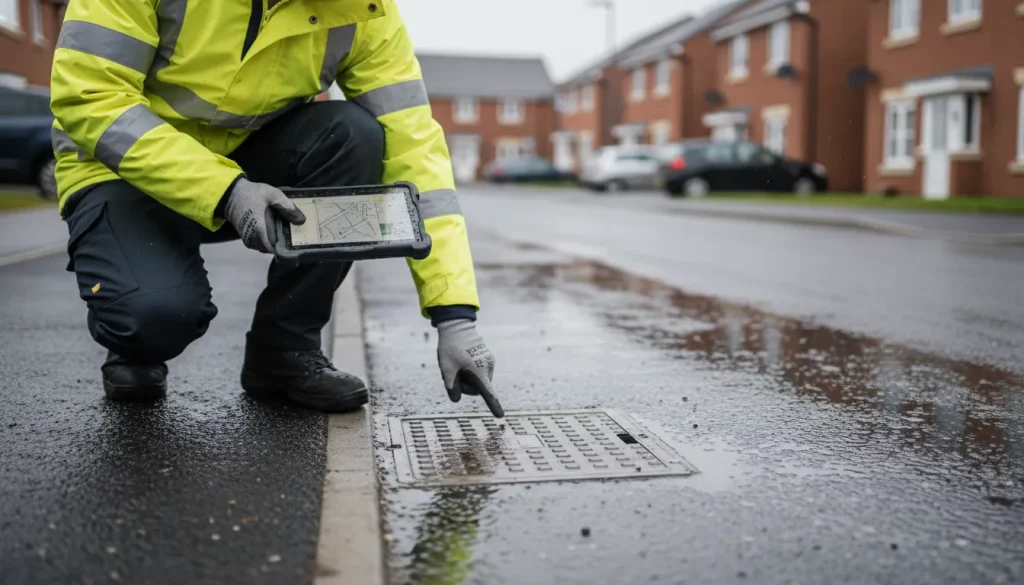
A Section 38 bond (or surety) is your financial guarantee to the local highway authority that you’ll complete new roads to adoptable standards. It’s required when you enter into a Section 38 agreement for new road adoption, protecting the council if you default or fail to fix defects.
The bond typically covers 100-125% of the estimated construction cost.
That’s serious money. On a 50-unit development with £800k of highway works, you’re looking at a bond value around £1m locked away until the council formally adopts your roads.
💷 The real cost of delayed bond release
Capital tied up in bonds can’t be deployed elsewhere. For developers working on multiple sites, this creates a cascading cash flow problem.
Consider the opportunity cost: £1m locked in a bond for an extra 12 months represents lost investment returns, delayed land acquisitions, or additional borrowing costs.
Ben Sperring, Surfacing and Civils Manager, explains: “We see developers who’ve finished building two years ago still waiting for bond release because one small drainage gully needs adjusting. That’s potentially £500k sitting idle over a £2k fix. The maths doesn’t work.”
The bond exists for good reason. But the release process shouldn’t punish developers who’ve delivered quality work.
Why highway bond release Section 38 gets delayed: the four common roadblocks
Understanding where delays happen helps you prevent them. Most stuck bonds share one or more of these issues.
🚧 Roadblock 1: Incomplete or disputed snagging lists
The defects liability period (usually 12 months after practical completion) exists so the council can identify issues before adoption. They’ll conduct inspections and produce snagging lists.
Problems arise when:
- Defects aren’t fixed promptly, extending the clock each time new issues appear
- Disputes occur over responsibility (was it poor construction or poor maintenance during the defects period?)
- New defects emerge from settlement, weather damage, or third-party damage
- Documentation is incomplete, making it unclear what’s been resolved
Each unresolved item delays final sign-off. And councils won’t release bonds until every single item is closed out.
📄 Roadblock 2: Missing or inadequate as-built records
Highway authorities need complete as-built documentation before adoption. This includes:
- Final construction drawings showing exact locations and depths
- Material test certificates and compliance records
- Drainage records and CCTV surveys
- Street lighting electrical certificates
- Commuted sum calculations
Missing even one certificate can halt the entire process. Councils are legally responsible for maintaining these assets for decades, so they’re understandably cautious about incomplete handovers.
Kerry Hopper, Finance Director, notes: “From a commercial perspective, incomplete records are the silent budget killer. You think you’re done, but then six months later you’re paying consultants to recreate drawings or re-test materials. That’s pure waste.”
💰 Roadblock 3: Unresolved commuted sum negotiations
Commuted sums are one-off payments covering the extra maintenance cost of non-standard highway features (block paving, special drainage, etc.).
These negotiations often happen late in the process and can be contentious. Councils may demand higher sums than developers budgeted for, creating commercial standoffs that delay adoption and bond release.
The calculation methodology varies between authorities, adding uncertainty. What costs £15k in one borough might be £40k in another for identical features.
🐌 Roadblock 4: Authority resource constraints and process delays
Let’s be honest: local highway authorities are stretched thin. Budget cuts mean fewer inspectors, longer response times, and backlogs of adoption applications.
Even when you’ve done everything right, you might wait months for:
- Inspection scheduling
- Report production
- Internal approvals
- Legal completion of adoption documents
This isn’t anyone’s fault, but it’s your capital that stays locked up while the wheels turn slowly.
According to recent industry data, average Section 38 completion timelines have extended by 30-40% since 2020, primarily due to authority resource pressures.
The highway bond release Section 38 process: what actually needs to happen
Understanding the formal process helps you manage expectations and identify acceleration opportunities.
📅 Standard timeline (when everything goes smoothly)
Month 0: Highway construction completes to approved standards
Month 1: Practical completion inspection by highway authority
Months 1-12: Defects liability period begins; you maintain the roads
Month 6-9: Mid-term inspection (some authorities)
Month 12: Final inspection and snagging list issued
Months 13-15: Defect rectification and re-inspection
Month 16: Final approval and adoption certificate issued
Month 17: Bond released
That’s 17 months in an ideal scenario. Reality often adds 6-12 months.
✅ Conditions that must be met for bond release
The highway authority will only release your bond when:
- All construction defects are rectified and verified through inspection
- Complete as-built documentation is submitted and approved
- All commuted sums are agreed and paid
- The highway is formally adopted through legal completion
- Any outstanding fees to the authority are settled
Miss any one of these, and the bond stays put.
🔍 What inspectors actually look for
Highway inspectors aren’t trying to fail you, but they have strict standards. Common focus areas include:
- Surface regularity and levels (standing water is a red flag)
- Edge details and joint quality (especially at gully connections)
- Drainage functionality (CCTV surveys confirm no blockages or defects)
- Visibility splays and sight lines (vegetation management matters)
- Street furniture condition (signs, lighting, bollards)
- Footway trip hazards (even small lips between materials)
Tony Flook, Managing Director, shares: “After 25 years, I can tell you the difference between a smooth adoption and a nightmare is attention to detail during construction. Fix the small stuff immediately. Don’t let it accumulate.”
How to accelerate bond release Section 38 and unlock your capital faster
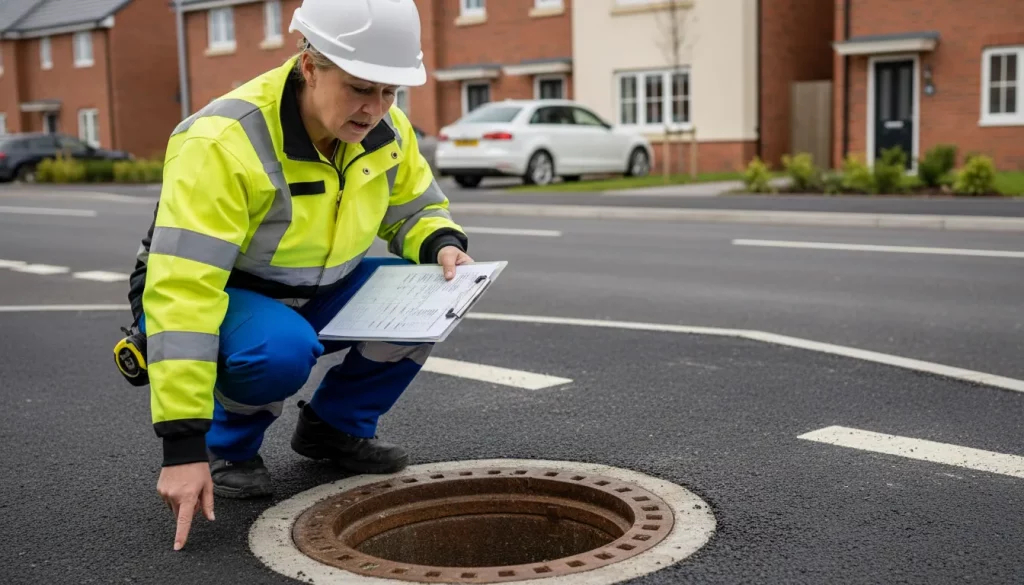
You can’t control council timelines entirely, but you can dramatically improve your position.
🎯 Strategy 1: Front-load quality control and documentation
Don’t wait until the end to get organised. Implement these practices from day one:
During construction:
- Photograph and document each construction stage
- Collect material certificates immediately upon delivery
- Conduct internal quality checks before authority inspections
- Maintain a live snagging list and fix issues as they arise
Before practical completion:
- Commission as-built surveys early
- Arrange CCTV drainage surveys before final surfacing
- Pre-agree commuted sum values with the authority
- Prepare adoption packs in advance
This front-loaded approach means you’re ready for final sign-off the moment the defects period ends.
🤝 Strategy 2: Maintain proactive authority communication
Authorities respond better to developers who engage constructively. Consider:
- Monthly progress updates during the defects period
- Pre-inspection walkovers to identify and fix issues before formal inspections
- Dedicated point of contact who knows the project history
- Rapid response protocols for any queries or concerns
Building a collaborative relationship reduces friction and speeds approvals.
🔧 Strategy 3: Address defects immediately, not eventually
Every day you delay fixing a defect is another day your bond stays locked.
Create a defect resolution protocol:
- Acknowledge receipt of snagging lists within 48 hours
- Provide resolution timeline for each item within one week
- Complete works within agreed timescales (typically 4-8 weeks)
- Request re-inspection immediately after completion
- Document everything with photos and completion certificates
Speed matters. The faster you close out defects, the faster you get paid.
📊 Strategy 4: Engage specialist adoption support
This is where experienced partners like Highways Plus make a measurable difference.
We’ve managed hundreds of Section 38 adoptions and understand exactly what each authority requires. Our team handles:
- Pre-construction design reviews to ensure adoptability
- Quality assurance during construction to prevent defects
- Documentation management so nothing gets missed
- Authority liaison using established relationships
- Defect resolution with in-house construction capability
- Adoption completion through to final bond release
Clients typically see 40-60% faster adoption timelines compared to managing the process internally.
Mike Clancy, Non-Executive Director, observes: “The commercial logic is simple. Pay a specialist to manage adoption properly, or pay far more in delayed bond release and opportunity cost. The ROI is obvious.”
💡 Strategy 5: Consider alternative bonding structures
Traditional cash bonds or bank guarantees aren’t your only options. Explore:
- Insurance-backed bonds (often cheaper than bank facilities)
- Staged release provisions (partial bond release after interim milestones)
- Parent company guarantees (if you have strong balance sheet)
Different structures offer different cash flow benefits. Your finance team should model the options.
Real-world impact: what faster bond release Section 38 actually delivers
Let’s translate theory into tangible outcomes.
📈 Case study: Regional housebuilder, 120-unit scheme
The situation: £1.8m Section 38 bond locked up for 26 months post-completion due to minor drainage defects and documentation gaps.
The intervention: Engaged specialist support to:
- Resolve outstanding drainage issues within 6 weeks
- Complete as-built documentation package
- Negotiate commuted sum reduction from £85k to £52k
- Manage final inspection and sign-off
The result: Bond released in 4 months from engagement. £1.8m returned to working capital, saving approximately £45k in financing costs and enabling earlier land acquisition for next phase.
🎯 The compound benefit of systematic improvement
When you improve bond release processes across multiple sites, the benefits multiply:
- Improved cash forecasting (predictable release timelines)
- Reduced financing costs (shorter lock-up periods)
- Better authority relationships (reputation for quality delivery)
- Lower risk provisions (fewer unexpected delays)
These advantages compound over time, creating competitive differentiation.
Common mistakes that extend bond release timelines
Avoid these pitfalls that we see repeatedly:
❌ Mistake 1: Treating adoption as an afterthought
Adoption should be designed in from the start, not bolted on at the end. If your team only thinks about Section 38 requirements after construction begins, you’re already behind.
❌ Mistake 2: Poor handover between construction and adoption teams
The site team that built the roads often moves on before adoption completes. Critical knowledge walks out the door, leaving the adoption team scrambling to recreate information.
Implement formal handover protocols with comprehensive documentation packages.
❌ Mistake 3: Ignoring small defects during the liability period
“We’ll fix it all at the end” is a recipe for disaster. Small defects multiply, get worse, and create bigger problems. Fix as you go.
❌ Mistake 4: Adversarial relationships with highway authorities
Yes, some authorities can be difficult. But antagonistic relationships never accelerate approvals. Professional, collaborative engagement always wins.
❌ Mistake 5: Inadequate budget provision for rectification
Budget 5-10% of highway construction value for defect rectification and adoption costs. Underfunding this creates commercial pressure that slows decision-making.
Integration with Section 104 and Section 278 processes

Section 38 bond release rarely happens in isolation. Most developments also involve:
- Section 104 sewer adoption (similar bond and adoption process for drainage)
- Section 278 highway works (modifications to existing highways)
These processes often overlap and are interdependent. For example:
- S278 junction works must be complete before S38 roads can be adopted
- S104 drainage adoption may be required before S38 highway adoption
- Commuted sums might cover features across multiple agreements
Coordinating these parallel processes prevents one delayed agreement from blocking the others.
A specialist partner can manage all three agreements simultaneously, ensuring nothing falls through the cracks.
The future of Section 38 bond release: what’s changing
The adoption landscape is evolving. Keep these trends on your radar:
🔄 Digital adoption processes
Some progressive authorities are implementing digital portals for:
- Online snagging list management
- Document submission and approval
- Inspection scheduling and reporting
- Real-time status tracking
These systems reduce administrative friction and improve transparency.
📐 Standardised specifications
Industry bodies are pushing for greater consistency in adoption standards across authorities. While full standardisation remains distant, incremental improvements are happening.
💰 Commuted sum reform
Growing recognition that current commuted sum methodologies are inconsistent and often excessive is driving calls for reform. Some authorities are adopting more transparent calculation approaches.
🤝 Collaborative frameworks
Forward-thinking developers and authorities are experimenting with framework agreements that pre-agree standards, processes, and timescales, reducing friction on individual schemes.
Frequently asked questions
How long should Section 38 highway bond release actually take?
From the end of the 12-month defects liability period, expect 3-6 months for final inspections, approval, and legal completion in ideal circumstances. However, 9-15 months is more common in practice due to authority backlogs and minor rectification requirements.
Can I get partial bond release before full adoption?
Some authorities will consider staged release provisions, particularly on large phased developments. This requires negotiation during the initial Section 38 agreement. Expect to retain at least 25-50% until final completion.
What happens if the highway authority refuses to release my bond?
If you believe you’ve met all conditions but the authority is unreasonably withholding release, you have legal recourse. However, litigation is expensive and time-consuming. Mediation or escalation through senior authority contacts usually resolves disputes faster.
Do I need to maintain the roads during the defects period?
Yes. You’re responsible for maintenance, winter gritting, street lighting, and keeping the highway safe and usable. Failure to maintain can generate new defects that extend the adoption timeline.
Can insurance-backed bonds be released faster than cash bonds?
The bond type doesn’t affect release timing directly. However, insurance bonds often come with support services that help manage the adoption process more effectively, potentially accelerating timelines indirectly.
What’s the single most important thing to accelerate bond release?
Complete, accurate as-built documentation submitted early. This single factor prevents more delays than any other. Get your records right from the start.
Conclusion: Take control of your bond release timeline
Bond release Section 38 delays aren’t inevitable. They’re the result of specific, addressable process failures.
The developers who unlock their capital fastest share common characteristics:
✅ They design for adoption from day one, not as an afterthought
✅ They maintain meticulous documentation throughout construction
✅ They fix defects immediately, not eventually
✅ They engage proactively with highway authorities
✅ They often partner with specialists who know the adoption landscape inside out
Your capital shouldn’t be held hostage by administrative friction or minor snagging items. With the right approach, you can cut typical bond release timelines by 40-60%, freeing up hundreds of thousands of pounds for more productive deployment.
Next steps:
- Audit your current Section 38 projects – identify where bonds are stuck and why
- Implement front-loaded documentation protocols for new schemes
- Review your defect resolution processes – can you respond faster?
- Consider specialist support for complex or delayed adoptions
At Highways Plus, we’ve helped dozens of developers accelerate bond release and recover locked capital. Our end-to-end service covers everything from initial design review through to final adoption sign-off.
Want to discuss your specific situation? Get in touch with our team for a no-obligation consultation. We’ll review your project, identify the blockages, and outline a clear path to bond release.
Your capital has better places to be than sitting in a bond account. Let’s get it working for you again.
References
- Advice Note – Highways Adoption (DLUHC / MHCLG)
Explains how Section 38 agreements and bonds secure completion of new roads, the conditions for adoption, and when bonds are released or reduced, including final certificate / bond release stages.
https://assets.publishing.service.gov.uk/media/62e7b821d3bf7f75b9121a6a/advice-note-highways-adoption.pdf - Buckinghamshire Council – Section 38 in‑depth guidance notes
Sets out how S38 bonds or cash deposits must cover full scheme cost, the role of the Provisional Certificate, and how and when developers can apply for bond reduction after that certificate.
https://www.buckinghamshire.gov.uk/parking-roads-and-transport/highways-development-management/applying-for-licences-agreements-and-permits/section-38-in-depth-guidance-notes - Wigan Council – Road adoptions (S38 or S278)
Short, accessible explainer that clarifies how S38 agreements are supported by bonds or deposits calculated by the highway authority, and that these can be called if the developer defaults, which is helpful when explaining why bonds are held up.
https://www.wigan.gov.uk/Resident/Parking-Roads-Travel/Roads/Road-adoptions-s38-s278.aspx